 Arcdh Arc – Association for Human Rights of Azerbaijanis of Iran "ArcDH"

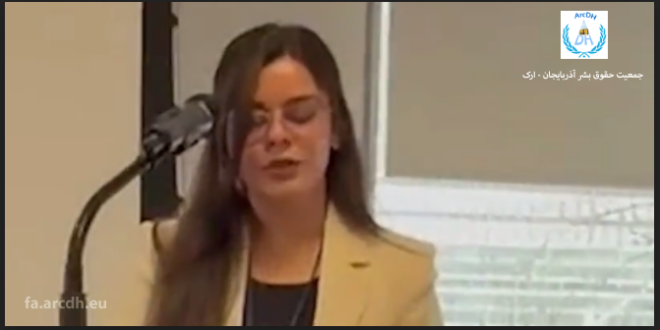
During the 70th session of the United Nations Commission on the Status of Women (CSW70) in New York, a representative of the Association for the Human Rights of Azerbaijanis in Iran (ARCDH) delivered a speech at a side event titled “Pathways to Justice and Rights”, highlighting the situation of Azerbaijani women in Iran.
In the speech, ARCDH underscored the multiple and intersecting forms of discrimination faced by Azerbaijani women. While all women in Iran are subject to gender-based legal restrictions, Azerbaijani women face additional barriers linked to ethnicity, language, and socioeconomic conditions, which significantly limit their access to justice, education, and institutional protection.
The organization identified child marriage as a major concern disproportionately affecting Azerbaijani regions. Despite Iran being a party to the UN Convention on the Rights of the Child, domestic laws continue to permit the marriage of girls at the age of 13—and even younger with judicial and guardian approval. ARCDH stressed that this legal framework facilitates, rather than prevents, early and forced marriages.
The speech also highlighted the denial of mother-tongue education as a key structural barrier. Azerbaijani children are educated exclusively in Persian, which weakens literacy, reduces legal awareness, and limits access to information and public services. According to ARCDH, this linguistic exclusion creates long-term obstacles for women and girls in understanding their rights and navigating legal systems.
ARCDH further emphasized that these overlapping inequalities increase vulnerability to poverty, forced marriage, and gender-based violence. The organization also raised concerns about the repression of cultural and linguistic activism, as well as reports of abuse and denial of medical care for women detainees in prisons such as Tabriz and Urmia.
Referring to recent protests in Iran, ARCDH noted that minority communities, including Azerbaijanis, have been disproportionately affected by state violence, with limited accountability and access to justice.
The speech concluded with a call on the United Nations and the international community to pay closer attention to the structural discrimination faced by Azerbaijani women and to take meaningful steps toward ensuring their rights, protection, and access to justice.